
Kidney Stone Pain: Why Does It Come and Go?
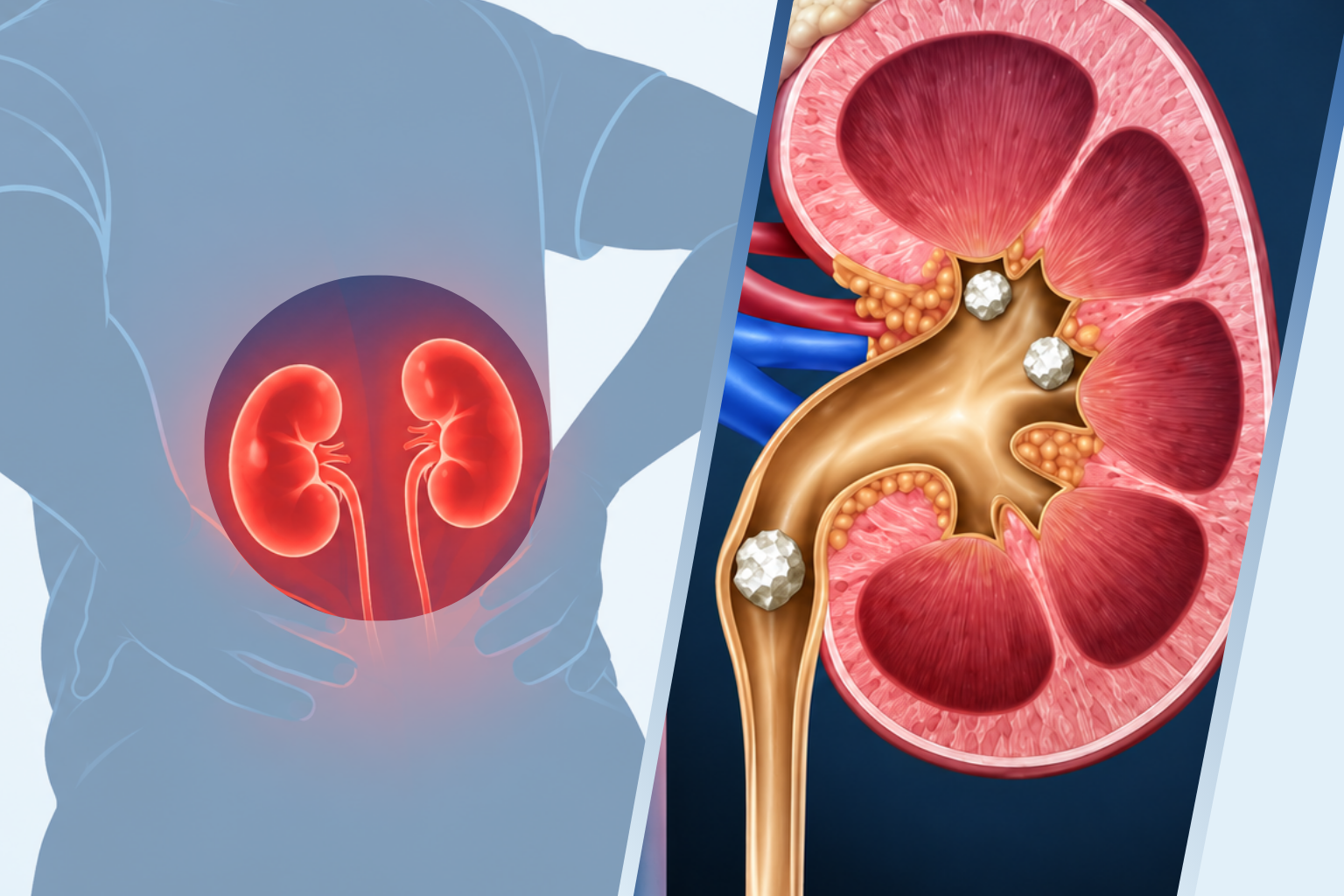
Kidney stone pain doesn’t always stay the same. One minute, you’re fine. The next minute, there’s a sharp pain on one side of your back that makes it hard to sit still or get comfortable. [1][2]
After some time, the pain settles.
You start to wonder, “Has the stone passed?”
And then, later, the pain returns. If this sounds familiar, you’re not imagining it. Kidney stone pain can come and go, sometimes in powerful waves. This happens most often when a stone moves from the kidney into the ureter — the narrow tube that carries urine to the bladder.
The pain may ease for a while and return as the stone moves through the ureter and the ureter contracts around it. This wave-like pain is called renal colic. [1][2]
Key takeaways
- Kidney stone pain often comes in waves rather than staying constant. [1][2]
- It may begin on your side or back and later move towards your lower abdomen or groin.
- Blood in the urine, nausea, vomiting or other urinary symptoms may occur along with the pain. [1][2]
- If you develop fever, cannot pass urine or the pain becomes difficult to control, seek medical care immediately. [1][2]
Why does kidney stone pain come and go?
Your ureter is like a narrow, flexible tube. When a stone enters it, your body tries to push the stone towards the bladder.
This can lead to a cycle like this:
That is why intermittent kidney stone pain can feel so unpredictable. It may be intense for one moment, settle for some time, and then return. [2]
Where does kidney stone pain usually start?
Kidney stone pain does not always stay in one place.
As the stone travels down the ureter, the pain can move with it. [2]
| What you may feel | Where it may mean |
|---|---|
| Pain in the side or back | Stone is higher in the ureter and may cause flank pain. [2] |
| Pain moving towards the groin | Pain can shift as the stone travels further down the ureter. [1] |
| Pain towards the groin | These symptoms can occur when a stone is lower in the ureter. [2] |
| Burning or frequent urination | A stone can irritate the urinary tract and cause bleeding. [1] |
A patient leaflet from University Hospitals Sussex National Health Service (NHS) Foundation Trust describes renal colic as severe, cramping pain that comes and goes and may travel towards the groin. [1]
Does stronger pain mean a bigger kidney stone?
Not necessarily. Pain intensity alone cannot tell you the size of a kidney stone. What the research does show is that renal colic severity is influenced by how suddenly the ureter becomes obstructed, rather than simply by how complete the blockage is. [2][3]
So even a smaller stone may sometimes cause severe pain.
What other kidney stone pain symptoms can occur?
Along with pain, some people may notice:
- Blood in the urine (hematuria)
- Nausea or vomiting
- Needing to urinate more often
- A sudden urge to urinate
- A burning sensation while passing urine. [1][2]
You may not experience all of these symptoms. The signs can vary depending on the size and location of the stone.
It is important to note that: symptoms alone cannot always confirm that a kidney stone is causing the pain. A systematic review found that no single symptom or sign was reliable enough on its own to confirm or rule out a ureteral stone. [3]
When should you get medical help?
Do not wait for the pain to settle on its own if:
- Your pain is getting worse
- Pain medicines are not controlling it
- You cannot pass urine
- You develop fever
- You feel unusually unwell. [1]
Fever together with urinary obstruction can be more serious and needs medical assessment. [2][4]
If kidney stone pain keeps returning, moves to a new area, or leaves you unsure about what is happening, Athaayu Uro Care can help you understand the symptoms and decide whether further evaluation is needed.
Frequently Asked Questions
References
- University Hospitals Sussex NHS Foundation Trust. Kidney Stones – Accident and Emergency Patient Information. June 2025.
- Thia I, Saluja M. An update on management of renal colic. Australian Journal of General Practice. 2021;50(7):445–449.
- Dahm P, Koziarz A, Gerardo CJ, et al. A systematic review and meta-analysis of clinical signs, symptoms, and imaging findings in patients with suspected renal colic. JACEP Open. 2022;3:e12831.
- European Association of Urology. EAU Guidelines on Urological Infections. 2026. Used specifically for infection associated with urinary tract obstruction.